[I held this speech at Atmosphere and Climate Competence Center’s (ACCC) Impact Week in a conference day on Carbon and Greenhouse Gases Verification in Agriculture -Users’ Needs and Research Community’s Solutions. The speech was held 10.4.2024]
For decades scholars from different fields have called for a sustainability transformation in agriculture. The focus of this transformation has been predominantly ecological. Environmentally sustainable farming has preoccupied researchers for nearly a century. Biodynamic farming was introduced in 1920s. Soon after, the organic movement started promoting organic farming methods.
But this has had relatively little success, it seems, compared to the persisting input-intensive chemicalized agriculture.
Recently, more attention has been given to regeneration, restoration and rewilding of agricultural landscapes. Parallel with these developments, carbon farming is being promoted as a promising driver of the contemporary sustainability transition in agriculture.
But I’m going to spoil the excitement for you. During the next 14 minutes I will argue that advancing the sustainability transition by placing a focus primarily on carbon sequestration and the development of carbon markets ignores the root causes of degenerative agriculture.
From a systemic perspective, I will suggest that advancing the crediting of carbon farming amounts to medicine that treats only the symptoms of the unsustainability of agriculture rather than addresses its root causes.
The focus of my research has been to produce a more holistic understanding of the agricultural sustainability transformation — in which ecological, economic, and social spheres are not examined separately, but together. Such approaches to agriculture are not new. They have been discussed in the literatures on, for instance, agroecology, food sovereignty, and regenerative food systems.
I am not alone in suggesting that just sustainability transformation in agriculture cannot be achieved by transforming farming methods only, as currently suggested by carbon-focused techno-scientific approaches. The fact is, that when speaking of transforming farming practices, farming livelihoods are also affected.

My research has been guided by an interest to better understand the possibilities and impossibilities of these livelihoods: how do farmers balance between the needs of the lands, plants and animals and the requirements of the growth economy?
For the past five years, I have been doing ethnographic research on diversified, regeneratively oriented farms. My main research method has been participant observation. The ethnographic approach is well suited to studying farming livelihoods, as it enables access to the everyday lives at farms and lived experiences of farmers.

I have done research on organic farms and biodynamic farms, agroecological and carbon conscious farms, permacultural market gardening farms, and at farms that integrate grazing animals and apply the principles of holistic management.
My main research tools have been a pen, a notebook and an iPhone with which I have recorded numerous on-farm discussions and interviews, and taken photos and videos.
I have participated in farm work throughout different seasons. I have prepared beds, sown seeds, done weeding, helped in harvesting and processing. I’ve done seed saving, fed animals and cleaned their barns. I’ve spread composts and prepared lunches for farm workers. I have cut trees and chopped wood.

I have participated in killing and slaughtering animals.
I have witnessed divorces and the beginnings of new relationships. I have witnessed the death of close kin and the birth of new family members.
In numbers my data translates into working and visiting 33 farms in 6 different countries, 177 days spent on farms, 1239 hours of participant observation, over 70 hours of recorded interviews and conversations, and hundreds of photos, and videos.
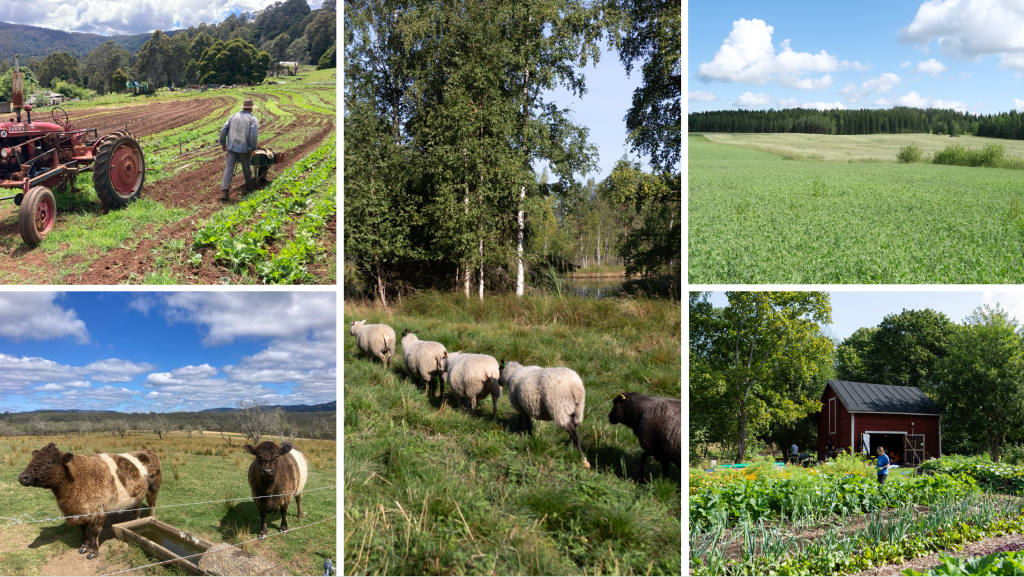
What I learned is that the ways in which people pursue livelihoods through regeneratively oriented farming are incredibly diverse. In other words, regenerative agriculture comprises far more diversity than the mainstream notion has come to stand for.
In fact, it is impossible to talk about regenerative farmers as one homogenous group. Plurality among farmers and farming practices is the rule rather than the exception.
This plurality is very well reflected in the stories that the farmers have shared with me and that I have documented during my research.
These are stories of seeking to work for the benefit of nature,
and of searching for a meaning,
stories of change and continuity,
and of empowerment and burnout.
Stories of intergenerational farming and of urbanites moving back-to-cultivate-the-land.
Stories of liberty and sacrifice…
…of hopelessness and hope.

The not so hopeful story of agriculture is currently told through a declining curve. There were some 160,000 farms in Finland in the beginning of the 1990s. Last year the documented number of farms was just over 42 000, according to the statistics of the Natural research institute.
The average age of a farmer is 54-years, with a third of farmers over the age of 60. While there has been a continuous yearly decline in the number of farms and of people working in farming, there has been a simultaneous increase in the size of farms.
This means that fewer people take care of bigger areas of land and a larger number of animals, carry bigger debt, and take bigger risks.
Similar statistics can be seen in other European countries, as I learned in a recent agroecology meeting that gathered people from France, Spain, Germany and Finland. Looking into the statistics, the future of agriculture doesn’t appear bright. There is, however, limits to what statistics can capture.

One limitation is that those who wish to become farmers, those who do volunteer work at farms to get practical education and start their own farming business, and those who have only recently started a smallholding, are not visible through statistics.
It is this new generation of farmers that to me seems particularly interesting.

I have myself worked with farmers who have recently made a generational shift, taken over their family’s farm and started to actively regenerate the landscapes and apply carbon farming methods. I have also worked with farmers who farm on leased land, farmers who come from outside farming families and farmers and market gardeners who have made a career shift.
There is one factor that unites all these farmers. They are all seeking to transform the food system, and not merely transition their agricultural practice.
These farmers develop short value chains and form direct relations with end-customers; they actively reduce dependency of fossil fuels and other resources coming outside the farms; they generously share their knowledge and teach ecological agriculture to new generations.
It is from this context that I have come to understand the role of carbon in the life of farmers.
Now: There are two main points that I wish to share here with you in relation to today’s theme regarding users’ needs. What do farmers have to say about carbon farming and the development of carbon markets?
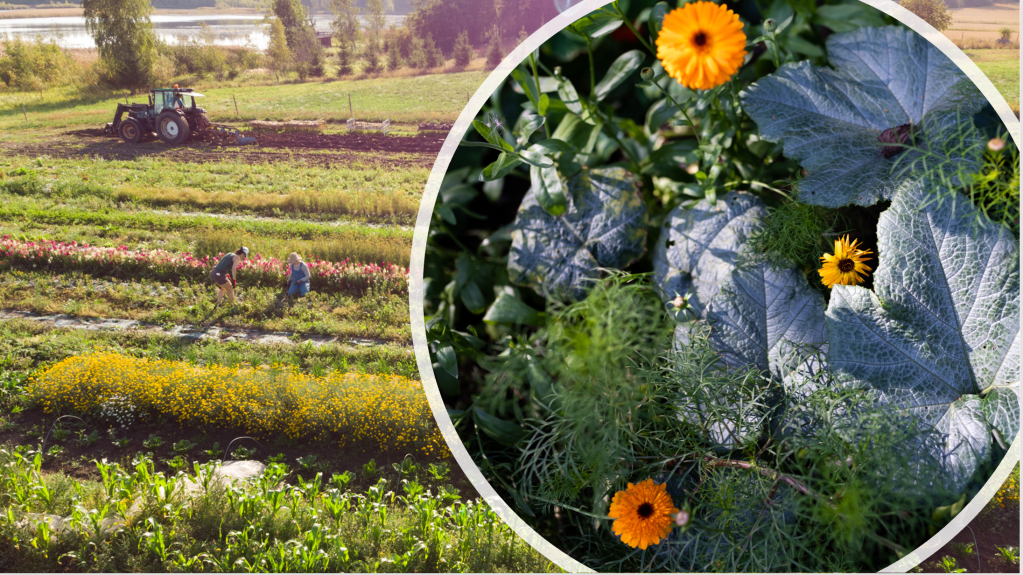
The first point is that carbon cycles are intrinsic to any kind of farming, whether or not they are acknowledged in the course of farming.
Understanding the processes of emitting and sequestering carbon, however, enables farmers to get better in their work. In fact, in my dataset all farmers are consciously applying multiple methods that have been identified as improving carbon sequestration.
These include, for instance, diverse cover and inter-cropping, well-planned rotation, keeping grazing animals, avoiding bare soil, in many cases reduced tillage or no-tillage, and in some cases developing agroforestry practices.
None of these farmers use non-organic fertilizers, pesticides or fungicides.
For farmers, the application of these kinds of methods has multiple benefits, which relate to the improving conditions of agricultural landscapes. In these landscapes, carbon sequestration figures as a side product of regeneratively oriented farming, not the primary focus of it.
One farmer asked me: “Does crediting carbon farming make any sense, really? If we think in a national land use scale, there are more efficient ways to reduce emissions and enable sequestration. – – If we think in a farm scale, carbon sequestration should be a side product of sensible and holistic farming system. In this system one would consider what to farm, how to farm, where to farm and to whom to farm. – – An extreme example of the absurdity in the carbon farming crediting could be applying the methods of carbon farming in operation that raises animals for producing fur.“
Another farmer pondered that it is more central to pay attention to the health and condition of soils and other benefits — such as improved water management and weather resilience — than to overemphasize carbon storages.
A third farmer raised concerns about the trade-offs they have noticed happening between pursuing biodiversity and optimizing carbon sequestration. Carbon farming, they said, should not be a more important goal than increasing biodiversity.
As measuring carbon is reliant on standardized and controlled conditions, working towards increasing farm level biodiversity is the contrary of standardized conditions. In the practice of farming, these goals begin to appear at odds with each other.
Yet another farmer raised further questions about the uncertainties in measuring carbon. [And I quote the farmer] “We are dealing with living ecosystems that are so interconnected, and so complex. There are so many variables that can’t be figured into calculations. Even within one field there can be significant variation in soils, water penetration, microclimates, and so on, all of which impact the growth of plants.”
By the way, three out of the four farmers that I mentioned are also scientists.
The second point is that carbon is a global commodity and a political tool, and thus it is important to recognize how knowledge produced on carbon farming contributes to or contrasts these market-based and political interests.
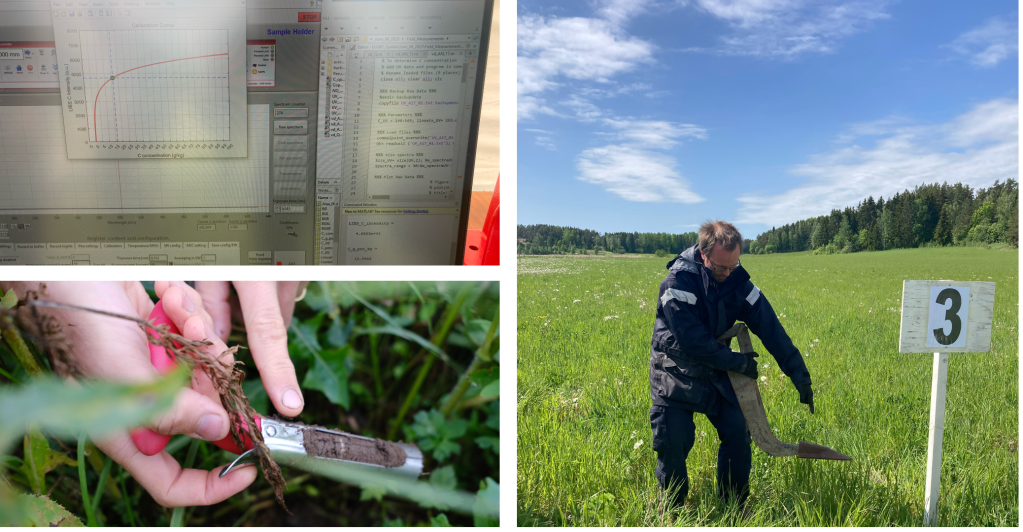
Based on interviews that I have conducted, both in Finland and in Australia with government officials, representatives of carbon farming organizations, and scientists studying carbon, I’ve made the following observations.
Carbon crediting is best suited for large landowners, especially those focusing on animal grazing. Once it’s set up and operating, as for instance in Australia, carbon farming crediting is so complex and bureaucratic that farmers are unable to apply for credits themselves but need a third party, an intermediary to do this work for them.
These are business organizations that make their profits as part of carbon farming crediting. This kind of system excludes diverse small and medium-sized farmers from entering the carbon market space.
Another factor of the already existing carbon farming crediting is that it is designed to reward for additionality, that is, those who are applying carbon farming methods to a relatively degenerated land are better placed to receive credits than those who have already managed to improve their carbon storages. – – The system is not designed to reward those who are already on the so-called “right path.”
Interestingly enough, most of the farmers with whom I’ve worked are saying that they wouldn’t even consider joining carbon crediting schemes.
One of the main reasons for this is that the idea of selling out their good work so that corporations can continue business-as-usual doesn’t appear tempting. – – In this sense, that large corporations need to compensate their emissions shouldn’t become the basis for legislation or agricultural support policies.
In fact, the farmers I’ve worked with have quite a lot to say about these matters. I wish to share with you some thoughts that come directly from the farmers:
– Support should be directed towards smaller production units instead of larger ones (small units create more and better-quality jobs, better care for cultivated land, and smaller loans).
– There must be separate support for those transitioning to innovative and sustainable farming, and for farms already engaged in such practices.
– Bureaucracy must not be a barrier to receiving support; we must avoid a situation where consultancy firms emerge as intermediaries, as a significant portion of the support would then flow to consultancy firms rather than farmers.
– Research must be careful not to focus solely on carbon sequestration, which ultimately is a by-product of measures supporting biodiversity and soil fertility.
– Selling compensation rights to large corporations must not become mandatory nor a requirement for receiving agricultural subsidies.
– Farmers should be able to receive credits and use them in their own value-chains.
To conclude: If taking a systemic view (as one should, I believe), carbon or any other type of farming needs to be understood as part of the existing economic system. Agri-business companies and agricultural policies have pushed farmers into a very narrow spot, where farmers have very limited autonomy. Most farmers are dependent on the input industry on the one hand, and on the processing and retailing companies on the other hand.
Representatives of these companies are also present here today. Farmers, on the other hand, are almost completely absent; they are between the tree and the bark, as the saying here in Finland goes.
So, it merits to ask: Whose interests are being served by advancing agricultural transition by focusing primarily on carbon? Whosehopes are being mobilized by advancing carbon markets? Are we in danger of missing the farmers’ voices?
So maybe we all — researchers, politicians, corporate actors and the civil society — need to start also paying attention to different set of questions:
Why do people want to work as farmers? Why do new farmer generations want to actively regenerate agricultural landscapes? What kinds of livelihoods do farmers find meaningful and motivating?
[thank you]
Photos: Risto Musta & Galina Kallio




 Galina Kallio