Read this post in English
[I wrote this text to be presented at a gathering / conference of the Finnish rural research community on Wednsday 28, 2024 at Iisalmi, Finland. The translation was primarily done through DeepL]
Ethnographic notes from the sense(s) of the land
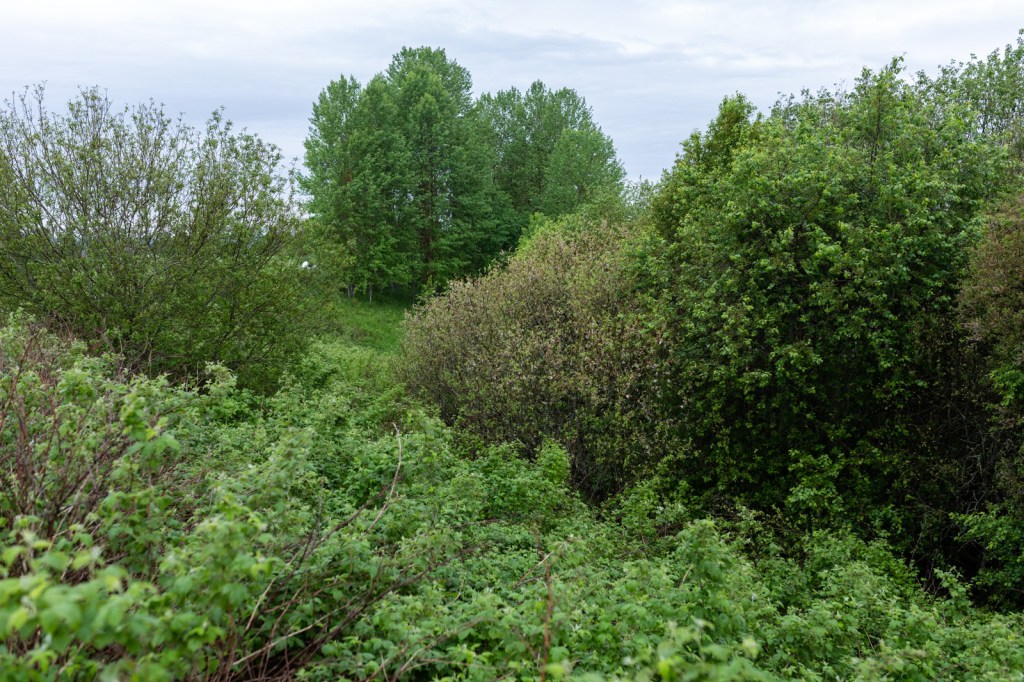
I vividly remember the moment when I began to sense the landscape around me in a new way. I was on a field trip in Norway and Andrew and I were standing by a ditch bank looking at a bushy ravine. In the distance, a flat field opened up before us, behind us a 500 m2 greenhouse with hundreds of years old heirloom varieties of edible plants. Andrew described how he planned to regenerate the ravine by planting a variety of perennials alongside the shrubs and trees. This was part of his vision for increasing the number of perennial food crops and adapting plants to local conditions.
As we stood there at the edge of the ravine, it dawned on me: where I saw a thicket, he saw an ecological succession; where I saw a delayed harvest, he saw a continuum of diverse genomes.
On the way back to the airport, I felt as if I had entered another reality. In the halls, illuminated by bright artificial lights, figures sat in their neat clothes. A cacophony of perfumes and sounds combined with a feeling of insignificance that grew stronger as I watched the ever-changing stream of people. For a moment, I did not recognise myself as a fellow species, but as an inhabitant of another planet in an aquarium, observing the goings-on of an alien world in a daze.
When I returned to Helsinki, I knew that something in me – my way of being part of this world – had begun to change, though I could not yet put my finger on it. I couldn’t help but think of the life force of the plants protruding between the concrete slabs, the clumps of wild herbs we call weeds and the paradises of pollinators, or as anthropologist Anna Tsing (2012) puts it, the “unruly edges” that teem with life and that we so desperately want to get rid of.
As I looked at the trees surrounded by metal fences along the asphalt roadsides, my stomach churned. The pre-peeled root vegetables wrapped in plastic at the grocery store disgusted me. And when the heartbreakingly beautiful sunset was drowned out by the banging of the East Road, I knew that the next morning I wouldn’t be heading for the campus office, but would cycle into the woods and make an office on a tree.
In my 3-year research project, funded by the Research Council of Finland and ending this month, I followed how different types of farmers balance the needs of the land and the economy, and how they regenerate landscapes, and struggle with the (im)possibilities of earning a livelihood through farming. I used to refer to their work as regenerative farming, but with the national newspaper and other media writing in a race about regenerative farming promoted by the ‘usual suspects’ — Fazer, Atria and Valio (and Arla Foods, Cargill, General Mills, Unilever…you name it) I have quietly switched to talking about people who practice diverse agriculture and small-scale farming.
My research led me to observe how knowledge based on measurement and verification and knowledge based on everyday experience are as far apart as a mother working in a rice field with a baby on her back and a farmer tilling his fields with a John Deere 9R series tractor weighing over 21 tonnes. My fieldwork experiences led me to reflect on the relationships of both scientists and farmers with the land and other living beings, and what we know, or can know, about these relationships and how we become aware of them.
In this short presentation, I draw on my ethnographic notes, sometimes drawing on the relevant literature, to describe our relationships with the more-than-human world. I will consider the topic through weeds, using plants classified as weeds as an example for examining land relations. The intermingling of doing, sensing, observing and interpreting is not an attempt to provide a neat analytical content, but rather to invite the listener to sit with me on what I call sense(s) of the land.
*
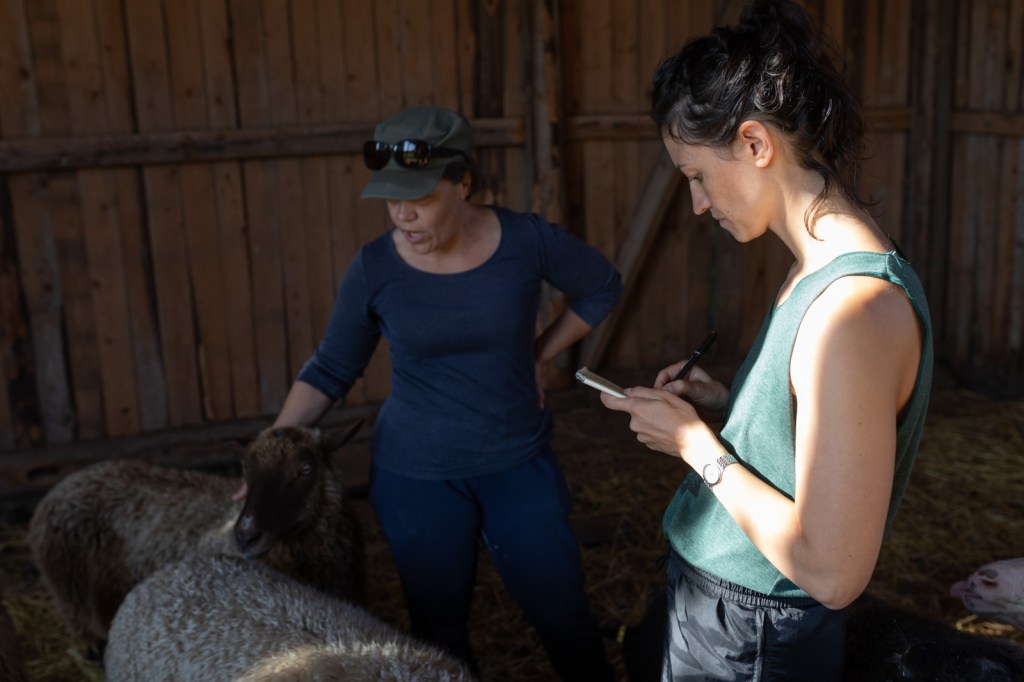
U-M comes to greet me with a warm and sunny welcome. We hug for a long time. We walk to the edge of the garden and she begins to tell me about how she is helping a natural products company set up a forest garden. “I had thought they were down to earth, but I was surprised how they wanted to set up a garden so that there would only be food for the humans to eat,” U-M says, surprised, perhaps a little disappointed, I interpret. U-M describes being repeatedly asked “is such and such a plant edible?” to which U-M repeatedly replies that “the plant is very easy to care for and takes its own space in the garden, the pollinators love it and it is also very tasty for humans”.
I follow U-M barefoot in the garden, stopping among the shrubs, saplings and raised beds of abundance, touching plants, pulling off leaves, smelling and tasting. Salvias spread out in a silvery-green growth, liverwort flowers in multicolours attracting pollinators, amaranths hang their blood-red growths. U-M wonders to me how so many people think of their gardens in terms of optimising edible plants for humans. They select very carefully to avoid “weeds”, “ugly” or otherwise inappropriate plants.
The color yellow has a particularly bad reputation. “Perhaps because it is the color of sun, power and light. People can’t stand its power,” says U-M as she picks dandelions for our lunch smoothie.
“The difference between a weed, a flower, and a crop is an epistemological distinction, a matter of perspective, not an ontological or immanent description of some essential feature of the plant itself,” writes Martin Parker, an organisational scholar. He conceptualises organisation (order) and disorganization (disorder) through the reference points made possible by weeds. Where order is created, disorder is created: weeds grow and flourish as a result of different organisational efforts.
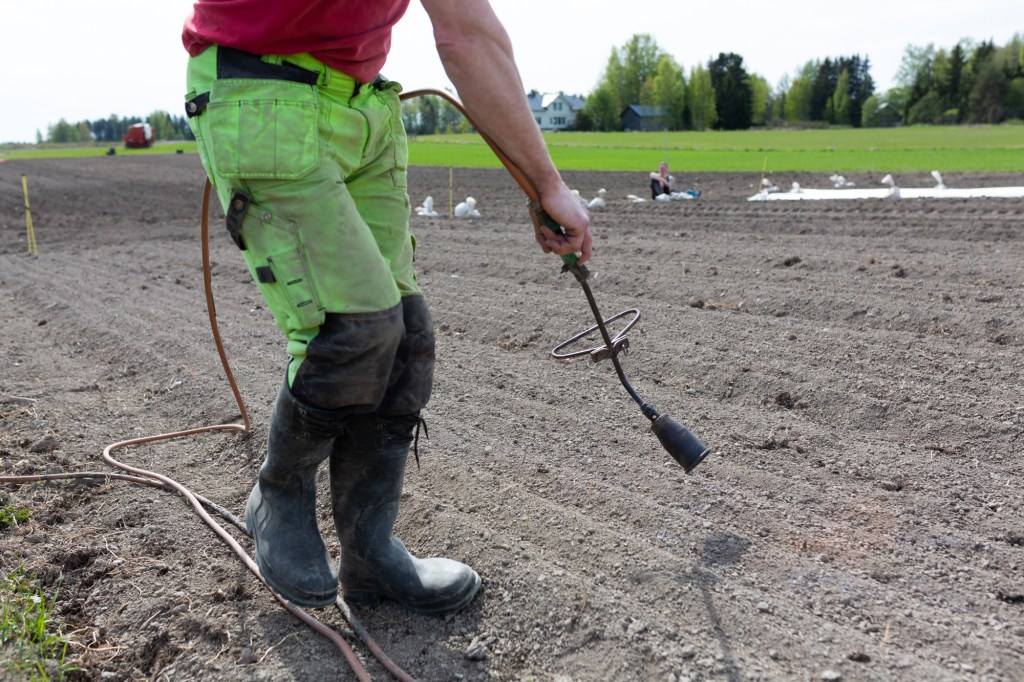
While one farmer goes around with a gas burner to scorch the weeds reaching for the sun, another sells all Barbarea vulgaris, nettles and other weeds’ to a fine-dining restaurant. In the restaurant’s kitchen, Barbarea vulgaris, a sort of wild cabbage, is a wild food that makes the chefs go wild, as one farmer told me. You can get a much better price per kilo for wild food, but you can’t grow wild food, otherwise it goes from wild to domesticated. Cultivated dandelion is tame, as a weed it is wild.
And yet: both grow as a result of order, or organisation.
The clay soil is packed under my rubber boots. I walk awkwardly between the growing beds. My feet cling to the pithy, muddy clay, and it feels as if weights have been attached to the soles of my feet. Eventually, the short-stemmed boot gives way and gets caught. I balance on one foot, trying to pull the boot off the ground without falling. I have to use my hands for support, and sink into the wet clay.
The soil has to be shaped to prevent it from packing into a dense impermeable surface through which the roots cannot penetrate. Only the weeds can hide their roots from the sunlight in such compact soil.
I think of the roots of a dandelion, which, on another patch of field, push their way into the depths of the clay soil. “Plants always tell us something about where they grow, especially if they have chosen it themselves,” I hear U-M’s voice in my head. The dandelion finds compact soil and shapes and expresses it with its roots. The dandelion root is strong, aromatic, sublimely lonely.
But I am not immersed in a field of dandelions, but in a field that is being shaped to grow crops for nearby CSA customers. No synthetic fertilizers or pesticides are used here, just organic compost and marigolds as companion plants, which hopefully will keep cabbage pests away and attract pollinators. This year this field will grow cabbages, next year something else, and the third year the land will be covered with green manure, which will be crushed to decompose and become food for small organisms.
“Weeds are complex forms of plant organization that displace other forms of plant and non-plant organization,” writes Parker. But while the mixtures used as green manure – which grow honeysuckle, timothy, clover, alfalfa, reed canary grass, caraway, forage pear and marigold – displace other plants, they are not weeds. And even if people do not use these green manure plants for food, they have another purpose, another goal towards which people organise themselves.
Organising is about increasing order. Disorder is something that arises out of or in the absence of organisation, in spite of – or precisely because of, as Parker suggests – efforts to organise. Straight rows, timely harvesting, fertiliser rates calculated from soil nutrient analysis and kilo prices written on excel spreadsheets all tend to produce order. A bird’s nest in the middle of the field, staged ripening, the spread of unwanted fungal spores and root systems in the soil, and a cow slaughtered on the farm, whose carcass is exchanged for ‘free labour’, produce disorder.
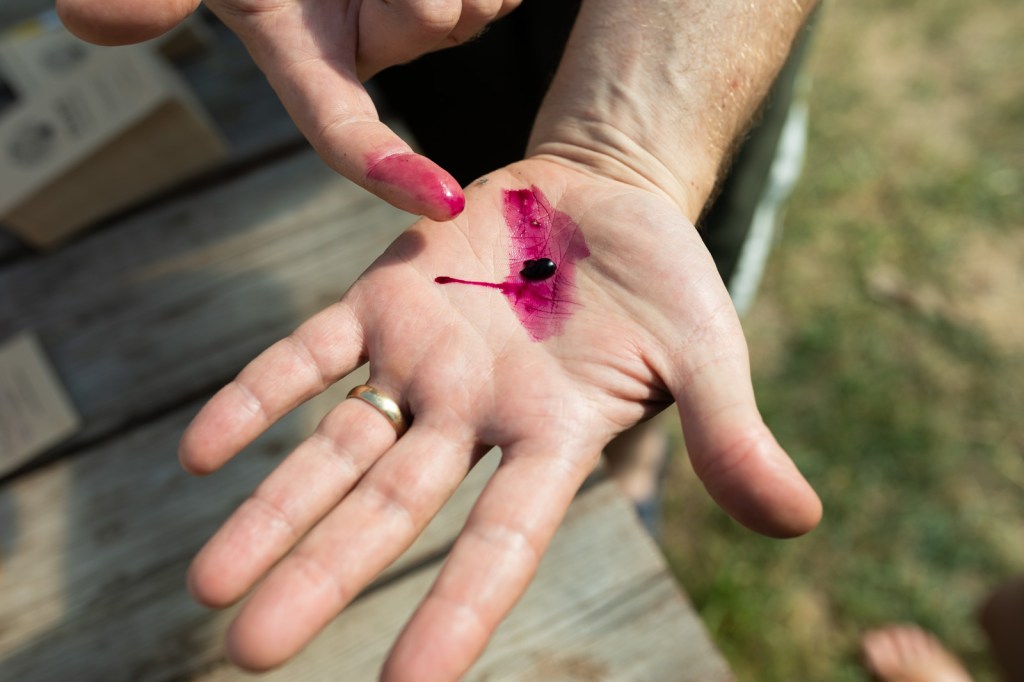
Andrew crushes a seed in my hand, which turns my palm pink. I feel the potential of life force damp and cool on my skin. “We humans produce order in the opposite way to the rest of ecology,” says Andrew. “What appears to us as disorder is order in nature; what is order to us is disorder to nature. In nature, the earth is never bare, the fruit ripens unevenly, the plants reproduce abundantly.“
In organisational theory, order and disorder are therefore inverted.
While Parker does not question this ontological distinction, he seeks to complicate and extend organisation theory to take account of the rest of the world. For Parker, weeds serve as a metaphor for organization, through which he shifts attention to wild, revolutionary, and autonomous action.
He carries his reader through his scholarly text, showing how the ‘weed’ is a category that is mobile, that takes its meaning from the context in which it is placed. Weeds are created in a particular time and place, by the successes and failures of organisations, enabled by movement and natural forces.
In essence, I start to think, weeds are created as people’s interpretations of the relationships they form with the wider environment around them.
But while Parker tries to move away from human-centeredness, romanticization, and bipolar, stable categories, he remains, like all of us, trapped in struggles for meaning.
“When you invent a crop, you invent a weed,” he writes.
But if, as Parker himself suggests, weed is a movement from one category to another, then it must have been classified as part of a category from the outset. This category must have been created in relation to something else that exists.
If we consider the history of agriculture, which came first, the weed or the crop? Wild or domesticated?
According to Parker, first comes the crop and then comes the weed. But what if we imagined it the other way round – as we did with order and disorder?
Only when we have learned to make use of Chenopodium bonus-henricus can it be replaced by spinach, Barbarea vulgaris by vegetable cress, the ancient grains by bread wheat. Only when a plant begins to become weed will a plant emerge that is more valuable when cultivated.
Only when you invent a weed, do you invent a crop.
I get down on my knees between the rows of plants and start plucking small and slightly larger plants from the soil. Some come away neatly revealing tiny rootlets and some cling firmly to the soil with their underground knuckles. I have to search for bits of roots in the soil, and sometimes use force to tear off the parts of the plant that are stuck in the ground. My brain sends a message to my arms, and to my hands, which move purposefully towards the end of the row of benches. My brain is aware that I have no names for these plants. I am left to wonder what the plants would grow into if they were allowed to stay and take root. Who would they displace and who would they attract?
By exposing the roots of plants to sunlight, I know I am causing them to die a slow death. Andrew has told me that plants are like people, but upside down. Their brains, or roots, are underground, and their bodies, or other life functions, are above ground. When I expose the roots to the sun, I fry the plants’ brains and their other vital functions cease to function.
By working on farms, I realize that life and death are inseparable. They intertwine, like a Vicia cracca embracing the choking raspberry bush. I realize that I create death in order to create life. I realize that even a plant can die.
I realize that it is not just an epistemological, a difference of perspective, but something more fundamental: I realize that, in the sense(s) of the land, I need to turn upside down.
For while plants are born underground and die above the ground; we humans are born above the ground and when we die we end up underground.
[Tämä teksti on kirjoitettu esitettäväksi maaseutututkijoiden tapaamisessa Iisalmella 28.8-29.8.2024]
Muistan elävästi sen hetken, kun aloin aistia minua ympäröivää maisemaa uudella tavalla. Olin kenttätyömatkalla Norjassa ja seisoimme Andrewn kanssa ojanpientareen vieressä katsomassa pusikoitunutta uomaa. Kauempana edessämme avautui tasainen peltomaa, takanamme 500 m2 kasvihuone tuhatvuotisine maatiaislajikkeineen.
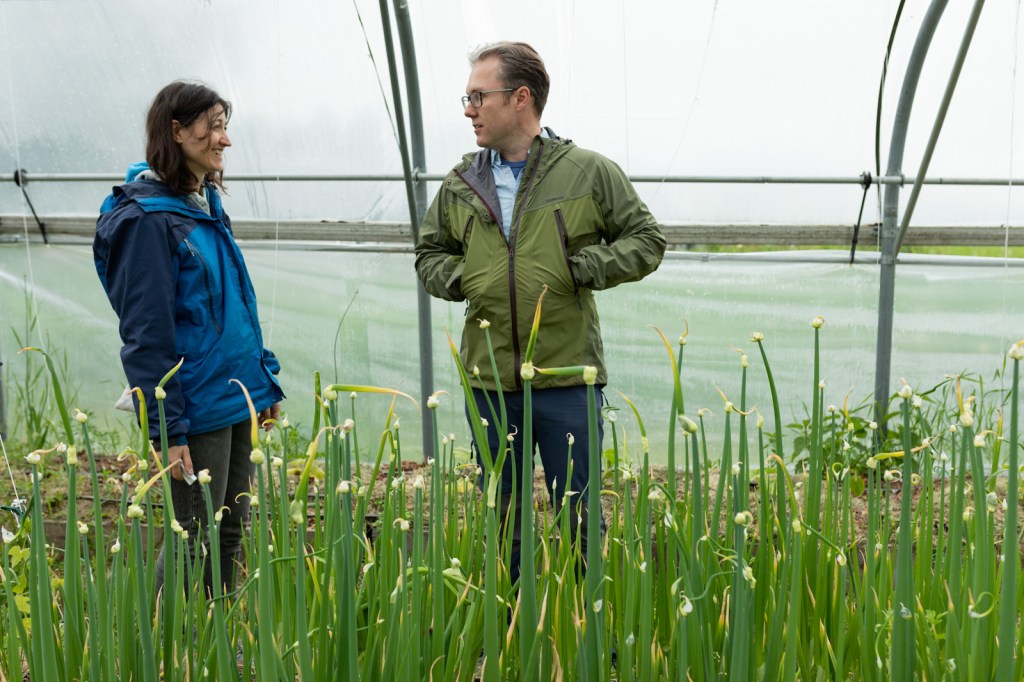
Andrew kuvasi, kuinka aikoo uudistaa uomaa istuttamalla pensaiden ja puuston rinnalle erilaisia syötäviä perennoja. Tämä oli osa hänen visiotaan siitä, kuinka monivuotisten ruokakasvien määrää lisätään ja kasveja sopeutetaan paikallisiin olosuhteisiin. Seisoessamme siinä ojan reunalla havahduin: siinä missä minä näin ryteikön, hän näki ekologisen sukkession; siinä missä minä havaitsin viivästyneen sadonkorjuun, hän havaitsi monimuotoisen geeniperimän jatkumon.
Paluumatkalla lentokentällä minusta tuntui, kuin olisin saapunut toiseen todellisuuteen. Kirkkaiden keinovalojen valaisemissa halleissa istuivat hahmot huolitelluissa vaatteissaan. Hajuvesien ja äänien kakofonia yhdistyivät merkityksettömyyden tunteeseen, joka voimistui voimistumistaan katsoessani alati vaihtuvaa ihmisvirtaa. Hetken ajan en tunnistanut itseäni lajitoveriksi, vaan akvaariossa olevaksi toisen planeetan asukkaaksi, joka tarkkaili hämmentyneenä vieraan maailman menoa.
Kun palasin Helsinkiin tiesin, että jokin minussa — tavassani olla osana tätä maailmaa — oli alkanut muuttua, vaikken vielä tuolloin osannut sanoittaa mikä. En voinut olla ajattelematta betonilaattojen välistä työntyvien kasvien elämänvoimaa, rikkaruohoiksi kutsumiamme villiyrttirykelmiä ja pölyttäjien paratiiseja, tai kuten antropologi Anna Tsing (2012) asian ilmaisee ”kurittomia reuna-alueita”, jotka kuhisevat elämää, ja joista haluamme niin kovasti päästä eroon.
Kun katsoin metalliaidoilla ympäröityjä puita asfalttiteiden laidoilla vatsaani kouraisi. Kaupassa muoviin käärityt, valmiiksi kuoritut juurekset kuvottivat minua. Ja kun sydäntäsalpaavan kaunis auringonlasku peittyi Itäväylän paukkeeseen tiesin viimeistään, että seuraavana aamuna en suuntaisi kampuksen työhuonelle, vaan pyöräilisin metsään ja tekisin puusta toimiston.
Tässä kuussa päättyvässä, Suomen Akatemian rahoittamassa 3-vuotisessa tutkimushankkeessani seurasin, kuinka erilaiset viljelijät tasapainottelevat maan ja talouden tarpeiden välillä ja kuinka he luovivat maanhoidon, perhe-elämän ja toimeentulon mahdollisuuksien ja mahdottomuuksien maastoissa. Viittasin heidän työhönsä ennen käsitteellä uudistava viljely, mutta Hesarin ja muiden lehtien kirjoittaessa kilpaa Fazerin, Atrian ja Valion vimmasta edistää uudistavaa viljelyä olen vähin äänin siirtynyt puhumaan monimuotoista maataloutta ja pienviljelyä harjoittavista ihmisistä.
Tutkimukseni johdatti minut havainnoimaan, kuinka mittaamiseen ja todentamiseen perustuva tieto ja arjen kokemuksista ammentavan tieto ovat yhtä kaukana toisistaan, kuin riisipellolla työskentelevä, lasta selässään kantava perheenäiti ja John Deeren 9R-sarjan reilu 21 tonnia painavalla traktorilla peltojaan muokkaava viljelijä. Kenttätyökemukseni saivat minut pohtimaan sitä, millaisia ovat sekä tutkijoiden että viljelijöiden suhteet maahan ja muunlajisiin toimijoihin, mitä tiedämme, tai voimme tietää näistä suhteista ja miten tulemme niistä tietoisiksi.
Ammennan tässä lyhyessä esityksessäni etnografisista muistiinpanoistani nojautuen välillä aihetta pohtivaan kirjallisuuteen kuvatessani suhteitamme muunlajiseen maailmaan. Pohdin aihetta rikkaruohojen kautta, käyttäen rikkaruohoiksi luokiteltuja kasveja esimerkkinä maasuhteiden tarkasteluun. Tekeminen, aistiminen, havainnointi ja tulkinta sekoittuvat toisiinsa, enkä pyri tarjoamaan siistin analyyttistä sisältöä, vaan pikemminkin kutsun kuulijan asettumaan kanssani maan tajun äärelle.
***
U-M tulee vastaan ja tervehtii lämmöllä ja aurinkoisena. Halaamme pitkään. Kävelemme puutarhan reunaa ja hän alkaa kertoa minulle siitä, kuinka on auttamassa erästä luonnontuotealan yritystä perustamaan metsäpuutarhan. ”Olin ajatellut että [he ovat maanläheisiä], mutta yllätyin miten he haluavatkin perustaa puutarhan niin että siellä olisi vain heille syötävää”, U-M kertoo yllättyneenä, ehkä hieman pettyneenä, tulkitsen. U-M kuvaa, kuinka häneltä on toistuvasti kysytty ”onko tämä ja tämä istutettava kasvi rikka?, johon U-M toistuvasti vastaa, että ”kasvi on hyvin helppohoitoinen ja ottaa oman tilansa puutarhasta, pölyttäjät rakastaa sitä ja se on myös hyvin maukas”.
Seuraan paljain jaloin puutarhassa käyskentelevää U-M:ää, joka pysähtelee pensaiden, puuntaimien ja runsautta notkuvien kohopenkkien lomassa, koskettelee kasveja, irrottaa lehtiä, haistaa ja maistaa. Salviat levittäytyvät hopeanvihreänä kasvustona, maksaruohot kukkivat monivärisinä houkutellen pölyttäjiä, revonhännät roikottavat verenpunaisia kasvustojaan. U-M ihmettelee minulle sitä, miten niin monet ajattelevat puutarhaansa siten, että saavat optimoitua syötävät kasvit ihmisille. He valikoivat todella tarkasti, ettei tule ”rikkoja”, ”rumia” tai muuten epäsopivia kasveja.
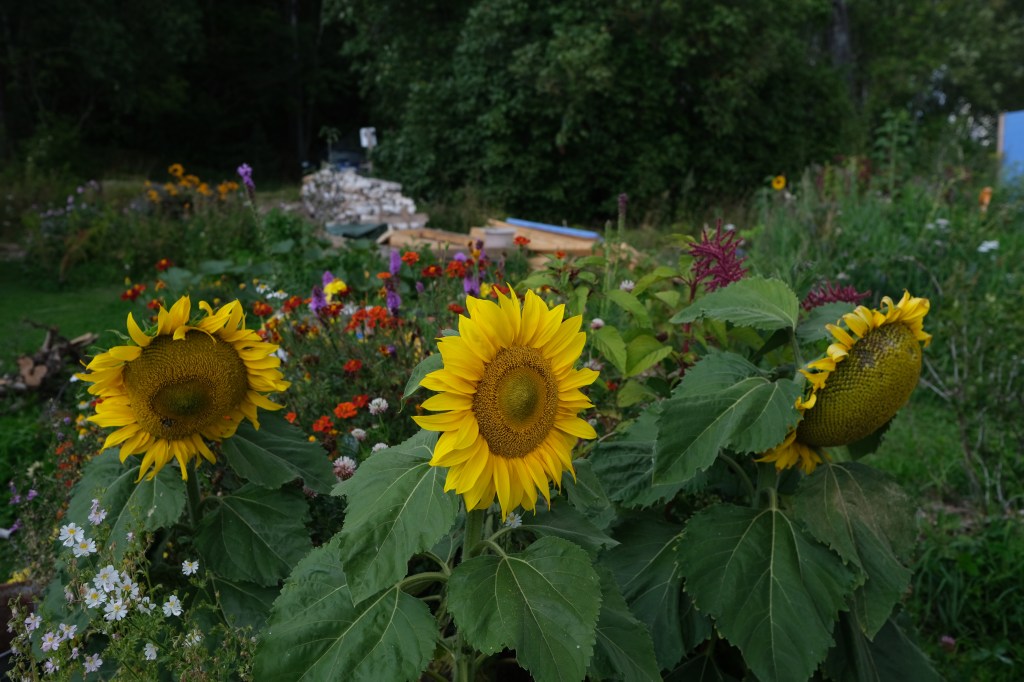
Keltainen väri on eritysesti huonossa maineessa. “Ehkä siksi, että se on auringon, voiman ja valon väri. Ihmiset eivät kestä sen voimaa”, toteaa U-M poimiessaan voikukkaa lounassmoothiin.
“Rikan, kukan, ja viljelykasvin välinen ero on epistemologinen. Kyse ei ole ontologisesta tai välittömään kuvaukseen pohjaavasta kasvin olemuksesta, vaan perspektiivin erosta”, kirjoittaa organisaatiotutkija Martin Parker. Hän käsitteellistää organisaatioita ja epäjärjestystä rikkaruohojen mahdollistamien vertailukohtien kautta. Siellä, missä luodaan järjestystä, synnytetään samalla epäjärjestystä: rikat kasvavat ja kukoistavat erilaisten organisoimispyrkimysten mahdollistamana.
Kun yksi viljelijä kiertää kaasupolttimen kanssa kärventämässä vartensa aurinkoa kohti kurottavia rikkoja, toinen myy fine-dining ravintolalle kaikki “peltokanankaalit, nokkoset ja muut rikat”. Ravintolan keittiössä peltokanankaali on villiruokaa, josta kokit riehaantuvat, kuten eräs viljelijä minulle asian ilmaisi. Villiruuasta saa paljon paremman kilohinnan, mutta villiruokaa ei saa viljellä, muuten se muuttuu villistä kesytetyksi. Viljelty voikukka on kesy, rikkaruohona se on villi. Ja kuitenkin: molemmat kasvavat järjestyksen, eli organisoitumisen seurauksena.
Savimaa on pakkautunut kumisaappaideni alle. Kävelen kasvupenkkien välissä vaivalloisesti. Jalat takertuvat markään, mutaiseen saveen, ja tunne on kuin jalanpohjiini olisi kiinnitetty painot. Lopulta lyhytvartinen saapas antaa periksi ja jää kiinni. Tasapainottelen yhdellä jalalla, ja koetan vetää saapasta irti maasta kaatumatta. Joudun ottamaan käsilläni tukea, ja samalla uppoan märkään saveen.
Maata joudutaan muokkaamaan jottei se pakkautuisi tiiviiksi läpäisemmätömäksi pinnaksi, minkä läpi juuret eivät pääse. Vain rikat jaksavat puskea juurensa piiloon auringonvalolta näin tiiviissä maassa.
Ajattelen voikukan juuria, jotka toisella peltotilkulla työntyvät savimaan uumeniin. “Kasvit kertovat meille aina jotain kasvupaikastaan, varsinkin jos he ovat itse sen valinneet”, kuulen U-M:n äänen päässäni. Voikukka löytää tiiviin maaperän ja muokkaa ja ilmauttaa sitä juurellaan. Voikukan juuri on voimakas, aromaattinen, ylvään yksinäinenkin.
Mutta minä en ole uponnut voikukkapeltoon, vaan peltoon, joka muokkautuu sadon kasvattamiseen lähiseutujen asiakkaille, eli kumppanuuksille. Tässä maassa ei käytetä synteettisiä lannoiteita eikä torjunta-aineita, vaan orgaanista kompostia ja rinnakkaiskasveina samettikukkia, jotka toivottavasti pitävät kaalin tuholaiset poissa ja houkuttelevat pölyttäjiä. Tänä vuonna tällä pellolla kasvatetaan kaaleja, ensi vuonna jotain muuta, ja kolmantena maa saa päällensä viherlannoksen, joka murskataan maatumaan pieneliöiden ravinnoksi.
“Rikat ovat monimutkaisia kasvien organisoistumisen muotoja, jotka syrjäyttävät muut kasvien ja ei-kasvien organisoitumispyrkimykset”, kirjoittaa Parker. Mutta vaikka viherlannoksena käytettävät seokset — joista kasvaa hunajakukkaa, timoteita, apilaa, sinimailasta, ruokanataa, kuminaa, rehuvirnaa ja kehäkukkaa — syrjäyttävät muita kasveja, eivät ne ole rikkoja. Ja vaikka ihmiset eivät hyödynnäkään näitä viherlannoksen kasveja ravinnokseen, niillä on muu tarkoitus, muu päämäärä, jota kohti ihmiset organisoituvat.
Organisoitumisessa on kyse järjestyksen kasvattamisesta. Epäjärjestys on jotain, mikä syntyy organisoitumisen puutteesta tai sen katveessa, järjestäytymispyrkimyksistä huolimatta — tai juuri niiden mahdollistamana, kuten Parker pohtii. Suorat rivit, oikea-aikainen sadonkorjuu, maaperän ravinneanalyysin perusteella lasketut lannoitemäärät ja excel-taulukoihin kirjoitetut kilohinnat pyrkivät tuottamaan järjestystä. Linnunpesä keskellä peltoa, vaiheittainen kypsyminen, ei-toivottujen sienirihmastojen ja juuristojen levittäytyminen maaperään ja tilalla teurastettava lehmä, jonka ruho vaihtuu “ilmaistyövoimaan” tuottavat epäjärjestystä.
Andrew murskaa käteeni siemenen, joka värjää sen vaaleanpunaiseksi. Tunnen elämänvoiman potentiaalin kosteana ja viileänä ihollani. “Me ihmiset tuotamme järjestystä juuri päin vastoin kuin muu ekologia”, toteaa Andrew. Se mikä meille näyttäytyy epäjärjestyksenä, on luonnossa järjestystä; se mikä meille on järjestystä, on luonnolle epäjärjestystä. Luonnossa maa ei ole koskaan paljaana, hedelmät kypsyvät epätasaisesti, kasvit siementävät holtittomasti.
Organisaatioteoriassa järjestys ja epäjärjestys ovat siis nurinpäin.
Vaikka Parker ei kyseenalaista tätä ontologista eroavaisuutta, hän pyrkii monimutkaistamaan ja laajentamaan organisaatioteoriaa ottamaan huomioon myös muunlajista maailmaa. Rikat toimivat Parkerille organisoitumisen metaforana, jonka kautta hän siirtää huomion villiin, vallankumoukselliseen, ja omaehtoiseen toimintaan.
Hän kuljettaa lukijaansa tieteellisen tekstinsä läpi osoittaen, kuinka “rikka” on kategoria, joka on liikkuva, joka saa merkityksensä siitä kontekstista, mihin sen sijoittaa. Rikat luodaan tietyssä ajassa ja paikassa, organisaatioiten onnistumisista ja epäonnistumisista, liikkeen ja luonnovoimien mahdollistamina.
Pohjimmiltaan, ajattelen, että rikkaruohot luodaan ihmisten tulkintana niistä suhteista, joita he muodostavat heitä laajempaan ympäristöön.
Mutta vaikka Parker pyrkii pois ihmiskeskeisyydestä, romantisoinnista ja kaksinapaisista, stabiileista kategorioista, hän jää, kuten me kaikki, merkityksellistämiskamppailuiden vangiksi.
“Kun keksit viljelykasvin, keksit rikkaruohon”, hän kirjoittaa.
Mutta jos, kuten Parker itse esittää, rikka on liikettä kategoriasta toiseen, niin tällöin sen on alunalkaen täytynyt tulla luokitelluksi osaksi jotain kategoriaa. Tämä kategoria on täytynyt luoda suhteessa johonkin muuhun olemassa olevaan.
Jos pohdimme maanviljelyn historiaa, niin kumpi tuli ensin, rikka vai viljelykasvi? Villi vai kesytetty?
Parkerin mukaan ensin tulee viljelykasvi ja sitten tulee rikka. Mutta entä jos kuvittelisimme asian päin vastoin — kuten järjestyksen ja epäjärjestyksen osalta teimme?
Vasta kun on opittu hyödyntämään hyvänheikinsavikkaa, voidaan se korvata pinaatilla, peltokanankaali vihanneskrassilla, pukinvehnä leipävehnällä. Vasta kun kasvista alkaa tulla rikka, syntyy kasvi, joka on arvokkaampi viljeltynä.
Vasta kun keksit rikan, keksit viljelykasvin.
Asetun polvilleni kasvirivien väliin ja alan nyppiä pieniä ja hieman isompia kasveja mullasta. Osa lähtee nätisti paljastaen pienet juurimykeröt ja osa tarrautuu vahvasti multaan maanalaisilla nystyröillään. Joudun etsimään juurten palasia mullasta, ja käyttämään välillä voimaa repiäkseni irti maahan tarrautuneita kasvinosia. Aivoistani lähtee viesti käsivarsiini, ja käsiini, jotka etenevät määrätietoisesti kohti penkkirivin päätyä. Aivoni tiedostavat, että näille kasveille ei minulla ole nimiä. Jään pohtimaan, millaiseksi kasvit kasvaisivat, jos saisivat jäädä ja juurtua paikalleen. Keitä ne syrjäyttäisivät ja keitä ne houkuttelisivat paikalle?
Paljastaessani kasvien juuret auringonvalolle tiedän aiheuttavani kasveille hitaan kuoleman. Andrew on kertonut minulle, että kasvit ovat kuin ihmiset, mutta käännettyinä pää alaspäin. Niiden aivot, eli juuret ovat maan alla, ja ruumis, eli muut elintoiminnot maan päällä. Paljastaessani juuret auringolle, kärvennän kasvien aivot ja niiden muutkin elintoiminnot lakkaavat toimimasta.
Työskennellessäni maatiloilla tajuan, että elämä ja kuolema ovat erottamattomia. Ne kiertoutuvat toisiinsa, kuin hiirenvirna, joka syleilee vadelmapensaan tukahduksiin. Tajuan, että synnytän kuolemaa luodakseni elämää. Tajuan, että kasvikin voi kuolla.
Tajuan, että kyseessä ei ole vain epistemologinen, perspektiivin ero, vaan jotain perustavanlaatuisempaa: tajuan, että maan tajun äärellä käännyn ylösalaisin.
Sillä kun kasvit syntyvät maan alla ja kuolevat maan päällä; me ihmiset synnymme maan päällä ja päädymme kuollessamme maan alle.


 Galina Kallio